


Introduction to BINs List and Methods 2026
If you’re searching for a BINs list and methods in 2026, you’re probably looking for reliable, up-to-date information on how Bank Identification Numbers work and how they can be used effectively. Whether you’re a beginner trying to understand the basics or an experienced user looking for the latest working techniques, this guide covers everything you need to know.
The landscape of BINs changes constantly. Banks update their ranges, new card types emerge, and old methods stop working. That’s why having a 2026-focused guide is essential. This article will walk you through what BINs are, how BINs methods work, the difference between BINs and other tools, and most importantly, how to find and use an updated BINs list that actually works.
We’ll also cover advanced techniques, common mistakes to avoid, insights from the community, and where to get the best BINs and dumps with PIN if that’s what you’re after.
Trusted & Recommended Vendors
100% Verified + Escrow Support. Get your tools from:
For carders who want dumps, Linkable cards and more
Offers Premium Bank logins with Email Access and more..
Offers Premium Fullz, CC Logz and easy cashout tools

Let’s dive in.
1. What Is a BIN? Bank Identification Number Explained
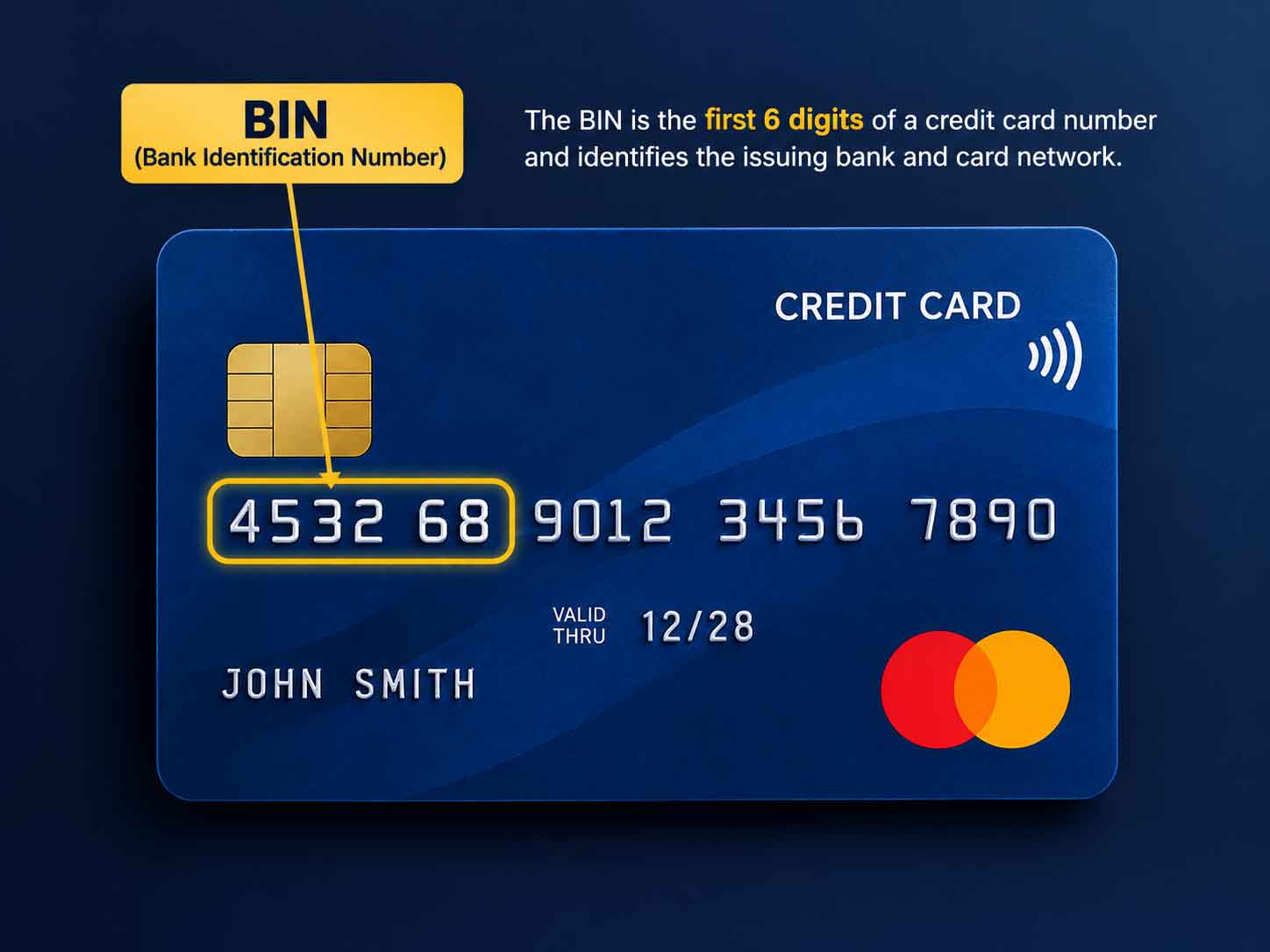
A Bank Identification Number, or BIN, is the first six digits of a credit card, debit card, or prepaid card number. These digits identify the issuing institution, the card network (Visa, Mastercard, Amex, Discover), the card type (credit, debit, prepaid), and the card level (classic, gold, platinum, signature, world elite, etc.).
For example, if a card number starts with 414720, that BIN tells you it’s a Visa, issued by a specific bank, and likely a standard credit card. Every card in the world has a BIN, and understanding these numbers is the foundation of BINs methods.

In 2026, BINs are more important than ever because they allow you to filter and target specific card types, banks, and regions before ever attempting a transaction. This saves time, reduces failures, and increases success rates.
2. How BINs Methods Work in 2026
A BINs method is simply a technique that uses BIN information to achieve a specific result. The most common application is in online transactions where you need to know which cards are likely to work for a particular purpose.
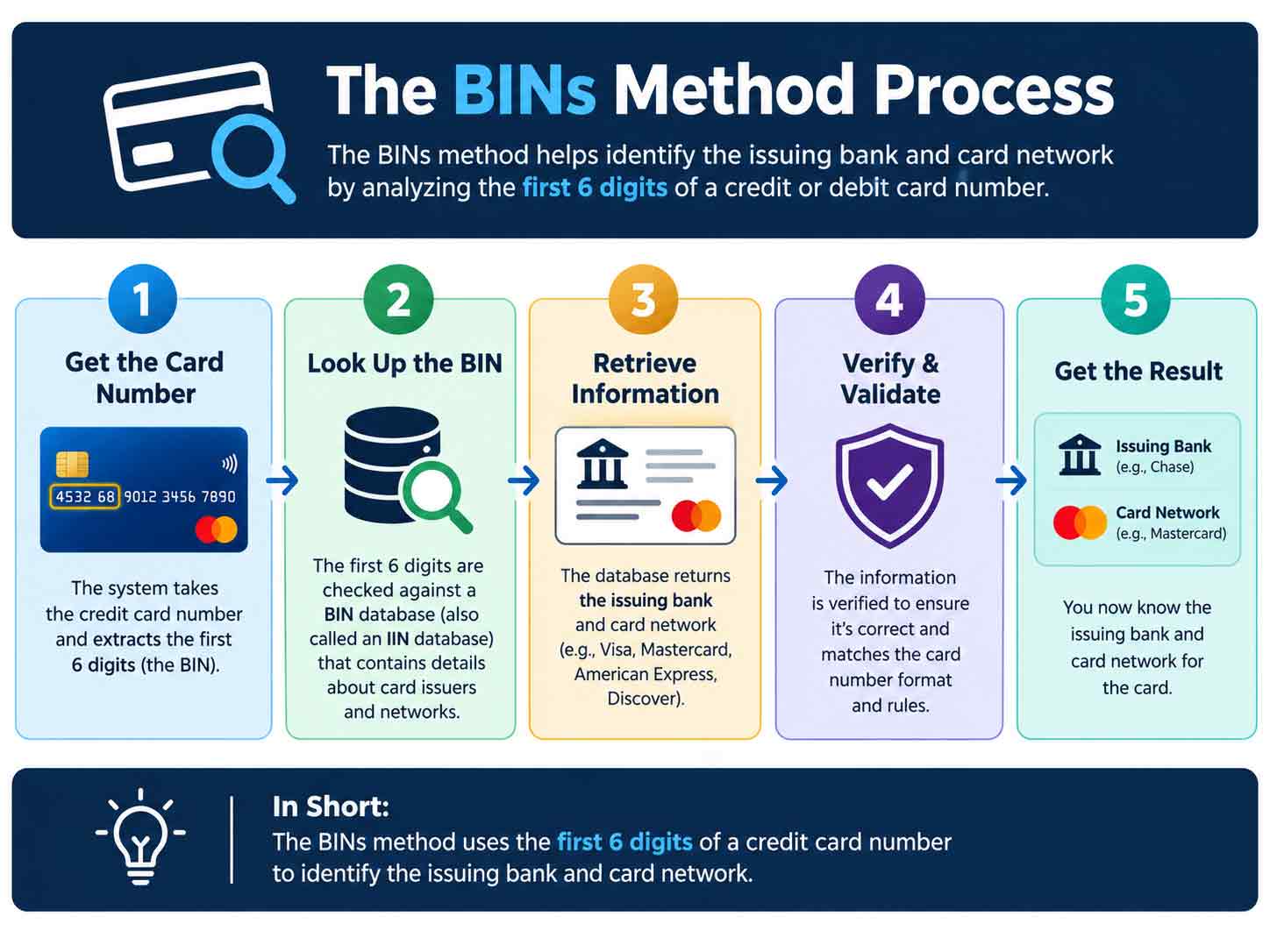
Here’s the basic workflow:
- Obtain a BINs list – This is a collection of BIN numbers along with their associated details (bank, country, card type, level, etc.).
- Filter the list – Based on your needs, you narrow down to BINs that match your target criteria. For example, if you need a US-issued Visa credit card with a high spending limit, you’d filter for that.
- Validate the BIN – Use a BIN checker or lookup tool to confirm the details are accurate and the BIN is still active.
- Use the BIN – Apply the BIN in your transaction or method.
The key to success in 2026 is having an updated BINs list. Old lists from 2024 or 2025 are often useless because banks change their BIN ranges frequently. That’s why relying on a source that provides regularly updated BINs is critical.
3. BINs vs Alternatives – What’s the Difference?
You might have heard of other terms like CCN (Credit Card Numbers), dumps, fullz, or bank logs. How do BINs compare?
| Tool | What It Is | Use Case |
|---|---|---|
| BIN | First 6 digits of a card | Identifying card type, bank, country |
| CCN | Full 16-digit card number | Online transactions where CVV is needed |
| Dumps | Magnetic stripe data from a card | Physical card cloning or POS transactions |
| Fullz | Complete identity package (name, SSN, DOB, address, etc.) | Identity theft or account opening |
| Bank Logs | Login credentials to a bank account | Accessing funds directly |
BINs are the most basic but also the most versatile tool. They don’t give you a full card number or access to funds, but they tell you exactly what kind of card you’re dealing with. This makes them essential for filtering and targeting.
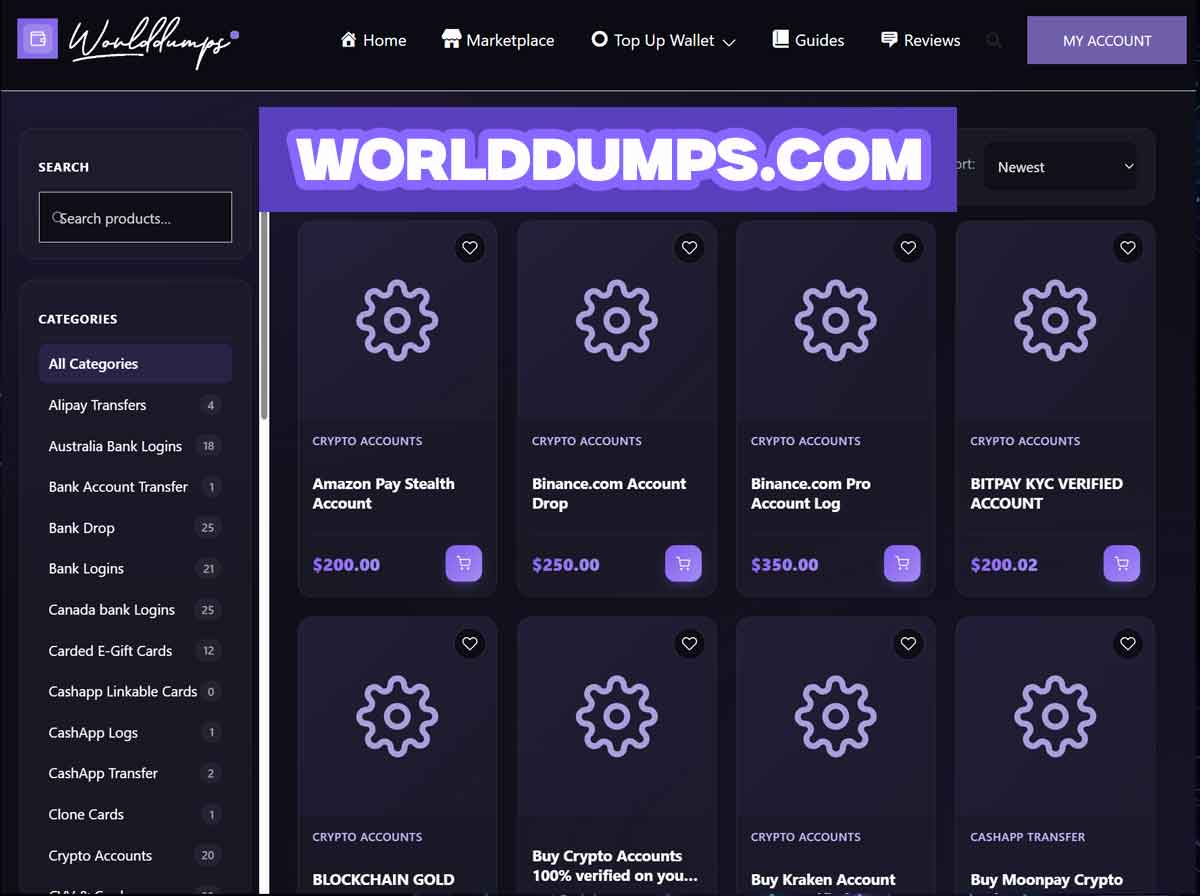
In contrast, dumps with PIN give you the full magnetic stripe data plus the PIN code, which is useful for ATM withdrawals or in-person purchases. If you’re looking for dumps with PIN, you need a reliable source like worlddumps.com.
4. What a BIN Lookup Really Gives You
A proper BIN lookup will return:
- Issuing Bank – The name of the bank that issued the card
- Card Network – Visa, Mastercard, American Express, Discover, etc.
- Card Type – Credit, debit, prepaid, charge card
- Card Level – Classic, Gold, Platinum, Signature, World Elite, etc.
- Country – Where the bank is located
- Bank Phone Number – Sometimes included
- Bank Website – Often included
- Card Brand – Some cards have co-branding (e.g., airline miles cards)
This information is enough to make intelligent decisions about which BINs to use for your specific purpose.
5. What a BIN Lookup Cannot Tell You
It’s important to understand the limitations of a BIN lookup. A BIN lookup will NOT tell you:
- The full 16-digit card number
- The expiration date
- The CVV/CVC code
- The cardholder’s name
- The cardholder’s address
- Whether the card has sufficient funds
- Whether the card is still active or has been reported stolen
A BIN is just the first six digits. It gives you the blueprint of the card, not the card itself. To get the full card details, you need a different source, such as a dump or a fullz package.
6. Updated BINs List for 2026 – What to Look For
An updated BINs list for 2026 should include:
- BIN numbers (first 6 digits)
- Issuing bank name
- Card network (Visa, MC, Amex, Disc)
- Card type (credit, debit, prepaid)
- Card level (classic, gold, platinum, etc.)
- Country
- Date added (so you know how fresh the BIN is)
The best lists are updated monthly or even weekly. A list from 2024 is likely outdated because banks regularly change their BIN ranges. For example, a BIN that worked for Visa credit cards in 2024 might now be assigned to a debit card or a different bank entirely.
If you’re looking for a reliable source of updated BINs and dumps with PIN, worlddumps.com is the place to go. They maintain current lists and provide high-quality dumps with PIN that work.
7. Why a Checker Result Is Not the Final Answer
Many people rely on free BIN checkers online, but these tools have limitations:
- They may use outdated databases – If the checker’s database hasn’t been updated, the result could be wrong.
- They may not show the full details – Some checkers only show basic info like network and country.
- They cannot verify if the BIN is currently active – Just because a BIN exists doesn’t mean it’s being used for new cards.
- They cannot tell you if the BIN is “working” for your specific method – That requires real-world testing.
The best approach is to use a BIN checker as a first step, then cross-reference with a trusted source like worlddumps.com and test the BIN yourself.
8. How to Build a BINs List That Stays Current
Building your own BINs list is possible, but it requires ongoing effort. Here’s how:
- Collect BINs from transactions – Every time you see a card number, note the first six digits.
- Use BIN lookup tools – Verify each BIN and log the details.
- Organize by category – Sort by bank, country, card type, and level.
- Update regularly – Delete BINs that no longer work and add new ones.
- Share with a community – Trading BINs with others helps everyone stay current.
However, this is time-consuming. Most people prefer to buy a ready-made updated BINs list from a trusted vendor. worlddumps.com offers exactly that.
9. Advanced BINs Techniques for 2026
Once you have a solid BINs list, you can use advanced techniques:
BIN Filtering
Use software to automatically filter BINs based on your criteria. For example, filter for only US-issued Visa Signature cards or only UK-issued Mastercard debit cards.
BIN Scraping
Some tools can scrape BINs from public databases or transaction logs. This is more advanced but can yield fresh BINs.
BIN Validation Chains
Instead of checking one BIN at a time, use a script to validate hundreds of BINs in sequence. This saves time and helps you build a working list faster.
BIN + Dumps with PIN
Combine your BIN knowledge with actual dumps with PIN. Knowing the BIN of a dump helps you predict its behavior. For example, a dump from a Visa Signature card will have different spending limits than a standard Visa debit.
If you want the best dumps with PIN to pair with your BINs list, worlddumps.com is the top choice.
10. Common Mistakes When Using BINs
Even experienced users make mistakes. Here are the most common ones:
Using Outdated Lists
A BIN list from 2024 is almost useless in 2026. Banks change their ranges constantly. Always use a current list.
Ignoring Card Level
Not all Visa cards are the same. A Visa Classic has lower limits than a Visa Signature. If you need high spending power, filter by card level.
Relying Solely on Free Checkers
Free BIN checkers are often inaccurate or incomplete. Use them as a guide, not the final word.
Not Testing BINs
Just because a BIN looks good on paper doesn’t mean it will work for your specific method. Always test before relying on a BIN.
Forgetting About Regional Restrictions
Some BINs only work in certain countries or with certain merchants. Always consider the target region.
Buying BINs Lists from Unreliable Sources
There are many scammers selling fake or outdated lists. Stick with reputable vendors like worlddumps.com.
11. Community Insights – What’s Working in 2026
Based on community feedback from forums, Reddit, and private channels, here’s what’s working in 2026:
- US Visa Signature and World Elite cards – These have high success rates for most methods.
- UK Mastercard Debit – Reliable for UK-based transactions.
- Canada Visa Infinite – Good for Canadian merchants.
- Australia Amex Platinum – High limits but sometimes flagged.
- Prepaid cards – Lower limits but less scrutiny.
The community also emphasizes the importance of using updated BINs. A BIN that worked last month might not work today. That’s why worlddumps.com is recommended – they keep their lists current.
12. FAQ – Frequently Asked Questions About BINs
What is a BIN in simple terms?
A BIN is the first six digits of a credit or debit card that identifies the bank, network, and card type.
How do I find a BINs list for 2026?
You can build your own or buy an updated list from a trusted source like worlddumps.com.
What’s the difference between a BIN and a CCN?
A BIN is just the first six digits. A CCN is the full 16-digit card number.
Can I use a BIN to make purchases?
No, you need the full card number, expiration date, and CVV. A BIN alone is not enough.
Are BINs methods illegal?
This guide is for educational purposes only. How you use the information is your responsibility.
Where can I get dumps with PIN?
worlddumps.com is the best place for quality dumps with PIN.
How often are BINs updated?
BINs can change monthly or even weekly. Always use a current list.
What’s the success rate of BINs methods in 2026?
It varies, but with a good list and proper technique, success rates can be high.
13. Conclusion
BINs are a fundamental tool for anyone working with card data. Whether you’re a beginner or an expert, understanding BINs list and methods in 2026 is essential for success.
The key takeaways are:
- Always use an updated BINs list
- Understand what a BIN lookup can and cannot tell you
- Combine BINs with dumps with PIN for best results
- Avoid common mistakes like using outdated lists
- Use trusted sources like worlddumps.com for BINs and dumps with PIN
For the best BINs lists and dumps with PIN in 2026, visit worlddumps.com. For bank logs with email access and linkable debit cards, go to Xhenox.com. For legit dumps with PIN and fullz, check out buyccfullz.site.
Stay updated, stay smart, and always test before you commit.
